
If certain meals leave you bloated, tired or running to the loo, the natural first thought in the UK is to book a GP appointment and ask for a food intolerance test. It's a sensible place to start. But many people come away surprised by what the NHS can and can't test for. This guide walks through the NHS route step by step, what each option actually checks, and where an at-home food intolerance test can fit in alongside it.

First, intolerance and allergy are not the same thing
It helps to know which question you're asking before you see your GP. A food allergy involves the immune system, usually comes on quickly (often within minutes) and can be serious. A food intolerance or sensitivity tends to build more slowly, often a few hours after eating, and shows up as everyday discomfort: bloating, wind, tummy pain, loose stools, headaches, tiredness or brain fog.
True allergies are only around 10% of reactions to food. Intolerances and sensitivities are the main cause of the everyday discomfort people put up with, which is why so many people look into sensitivities first. You can read more about common signs on our symptoms page.
If you ever have swelling of the lips, tongue or throat, trouble breathing, or feel faint after eating, that's an emergency: call 999.
What your GP can do
A GP appointment is still worth booking, especially if your symptoms are new, getting worse, or include weight loss, blood in your stools, or a change in bowel habit that lasts more than a few weeks. Your GP's job is to rule out other causes first. Depending on your symptoms, that might include:
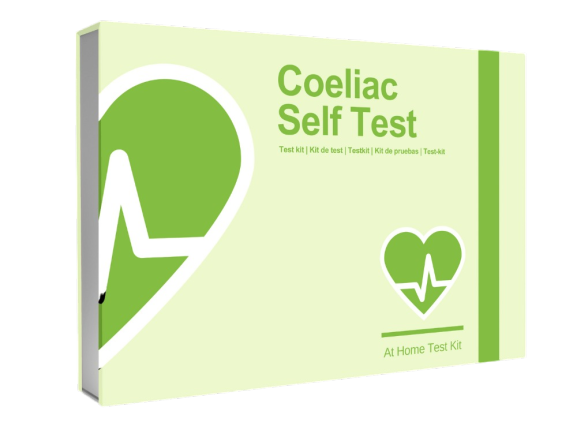
- A blood test for coeliac disease. This is an autoimmune condition, not an intolerance, but the symptoms overlap. The test only works while you're still eating gluten, so don't cut it out before you've spoken to your GP.
- General blood tests, for example to check for anaemia or inflammation.
- Advice on lactose, which is one of the most common intolerances. Some GPs will suggest a short trial without lactose, and in some areas you may be referred for a breath test.
- A referral to an NHS allergy clinic if a true allergy is suspected. Allergy clinics use skin prick or blood tests that look for allergy antibodies. These are designed for allergies, so they aren't used to find intolerances.
So, is there a food intolerance test on the NHS?
For most people, no. Apart from specific checks like coeliac disease and, sometimes, lactose, the NHS doesn't offer a general test that screens you for food intolerances. Instead, the usual NHS approach is:
- Keep a food and symptom diary for a few weeks. Our free food and symptom diary template makes this easy.
- Try cutting out a suspected food for a short time, then reintroduce it to see whether symptoms come back.
- See a dietitian if you're cutting out more than one food, or for longer than a few weeks, so your diet stays balanced.
This works, but it can be slow. Waiting lists for NHS dietitians vary a lot across England, Scotland, Wales and Northern Ireland, and it's hard to know which food to start with when you eat dozens of ingredients a day. That's the gap where many people look at an at-home test as a starting point.
Seeing a dietitian: NHS or private
You can ask your GP to refer you to an NHS dietitian, or you can see one privately. "Dietitian" is a protected title in the UK, so anyone using it must be registered with the Health and Care Professions Council. You can check any practitioner on the HCPC register before you book. A dietitian can help you plan an elimination diet safely and make sure you don't lose important nutrients along the way.
Where an at-home test fits in
An at-home sensitivity test doesn't replace your GP or a dietitian. What it can do is give you a list of potential sensitivities to explore, so your food diary and elimination trial start from a shortlist instead of guesswork.
Our intolerance test is an At-home Hair Sensitivity Test. You send a small hair sample and our testing team uses bioresonance to look for potential sensitivity patterns across hundreds of food and non-food items. You can see what happens after you send your hair sample, step by step.

In the UK you can choose a posted collection kit or digital hair-sample instructions (you use your own envelope and post it to us). Both use the same test. Results arrive in 5–7 working days once your sample is received.
| Test | Items checked | Digital instructions | Posted kit |
|---|---|---|---|
| Individual Sensitivity Test | 600 | £24.95 | £34.95 |
| Ultimate Individual Test | 1,000 | £29.95 | £39.95 |
| Optimum Sensitivity Test | 1,600 | £39.95 | £49.95 |
Prices shown are for UK orders on 26 October 2026. Your current price is on each test page.
If you're not sure which level suits you, our guide to comparing food sensitivity tests explains the differences. In short, the Individual test checks 600 items, the Ultimate test 1,000 and the Optimum test 1,600, our most complete option. Buying for two or four people? The Ultimate and Optimum tests both come in multi-person versions, which work out cheaper per person.
A sensible order of steps
Here's how many of our UK customers combine the two routes:
- Book your GP to rule out anything that needs medical attention, including coeliac disease (keep eating gluten until you've been tested).
- Start a food and symptom diary straight away. It's useful whatever route you take.
- Take an at-home food intolerance test if you'd like a shortlist of potential sensitivities to explore.
- Compare your results with your diary. Look for foods that appear in both.
- Trial changes one food at a time, ideally with a dietitian's support, and reintroduce foods to see what really makes a difference.
- Keep your GP in the loop, especially if symptoms change or don't improve.
If you feel unwell and aren't sure where to go, NHS 111 online can point you to the right service in England. In Scotland, Wales and Northern Ireland, use your local NHS advice service.
Common questions
Can I ask my GP for a food intolerance test? You can ask, and your GP will listen to your symptoms and may run tests to rule out other causes, such as coeliac disease. A general screen for food intolerances isn't usually available on the NHS.
Will the NHS refer me to an allergy clinic? If your GP suspects a true food allergy, they can refer you to an NHS allergy clinic. The clinic's skin prick or blood tests look for allergy antibodies, so they aren't designed to pick up intolerances.
How long does an at-home test take? Results arrive in 5–7 working days once your sample is received. Postal time is separate.
What if I'm not happy? We offer a 30-day 100% money-back guarantee on hair sensitivity tests.
Ready to start? Compare our sensitivity tests and choose the one that suits you.
About our tests
Test My Food Sensitivity has offered at-home hair sensitivity tests since 2008. Our tests use bioresonance, which looks at energetic frequencies from a hair sample to identify potential sensitivity patterns. They don't measure immune antibodies (IgE or IgG), they aren't a medical diagnosis and they aren't an NHS service. Use your personalised results as a starting point for exploration, and talk to your GP or a registered dietitian before making big or long-term changes to your diet.